Apparel & accessories packaging
Share a typical packed garment and the range of sizes in your collection. Plan folding space, brand visibility and the outer shipment as one system.
Discuss this application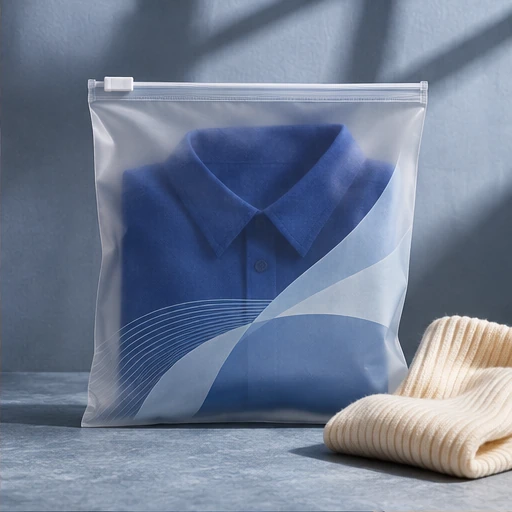
Measure the garment as your team folds it
Measure a folded item from the packing table, including its hangtag, spare button and any tissue wrap. Record the thickest point as well as the face dimensions. Trial both the smallest and largest garments in a proposed size group. A bulky hoodie can pull the slider track out of line even when its folded outline matches that of a thinner shirt.
Design for picking as well as unboxing
Give a warehouse picker a sealed sample and ask them to identify style, size and colour without opening it. Decide where a clear panel or SKU label belongs, then place the bag into the outer mailer with a typical order. Check that the inner closure and label stay accessible when a customer opens the parcel and prepares an exchange.
Planning your project.
Should every clothing size have its own packaging size?
Group garments by folded volume and thickness. Use samples from the extremes of each group to test packing time, presentation and closure. Specify another bag size where the existing size group slows packing or leaves the garment loose.
What do we send for a printed garment bag order?
Send a folded-garment photo with a scale, the usable dimensions, opening side, desired finish and label location. Add your retailer’s instructions for venting or printed warnings where these apply to the destination.