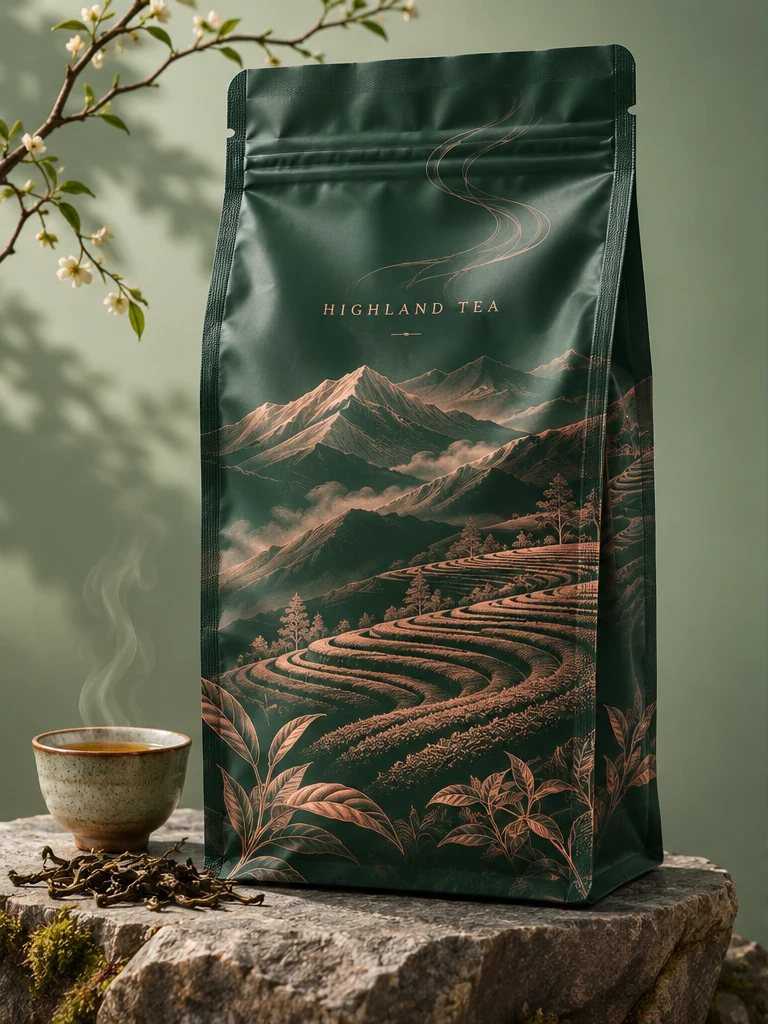
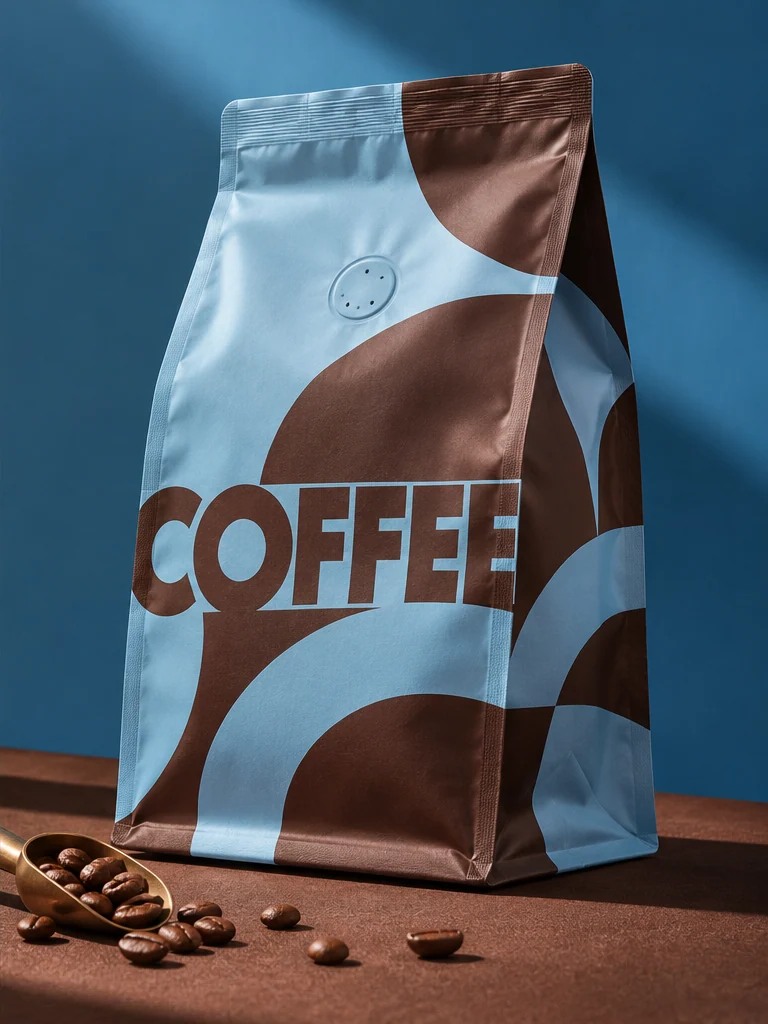
Custom flat-bottom pouches
A box-like base and side panels give this flexible pack a defined footprint. Plan the filled shape alongside the artwork on each face.
Enquire about this bag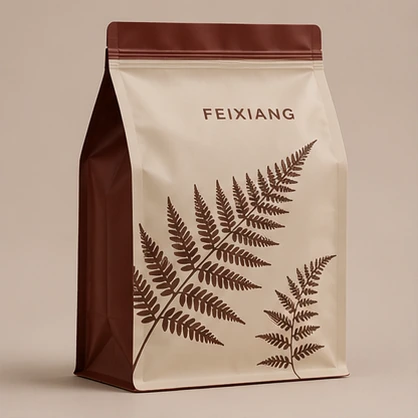
Box-bottom pouch · The flat base and side panels give the pack a box-like footprint. Mark the front, back and side faces on the artwork. Browse bag terminology
Fit for your product.
A flat-bottom pouch makes sense when the shelf plan calls for a rectangular base and the brand needs room on the side panels. A coffee roaster might reserve the front for the blend name and a side panel for brewing notes. Before choosing dimensions, set a filled sample alongside the neighbouring packs. Then arrange several samples inside a shipping carton to check the footprint at both stages.
Details to specify
- Filled footprint
- Give the available shelf width and depth, plus any shelf-height limit. Record the dimensions of the filled pack at its widest point.
- Side-panel copy
- Map each design panel separately and mark the reading direction. Open the gussets on a mock-up to check which parts of the design face the shopper.
- Filling opening
- Supply the filler or scoop dimensions alongside the product size. Check the proposed opening with the equipment your packer will use.
- Carton layout
- Share the carton inside dimensions and preferred units per layer. Check how the filled top or closure fits when the carton is closed.
Before you order.
How do I compare a flat-bottom pouch with a conventional stand-up pouch?
Fill one of each with the same product. Compare shelf depth, visible side-panel space, and units per carton. These measurements make the format decision and price comparison more useful.
What should a coffee roaster specify about a valve?
Ask the packer whether the coffee and packing schedule call for degassing. If a valve is requested, mark its location and send the filling and storage conditions for review.