Custom stand-up pouches
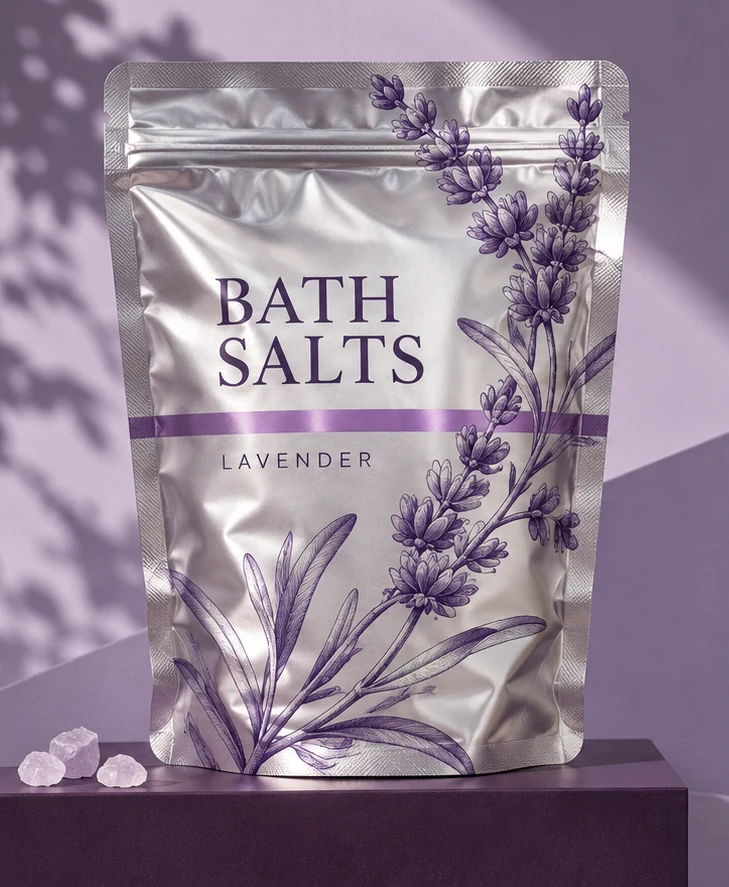
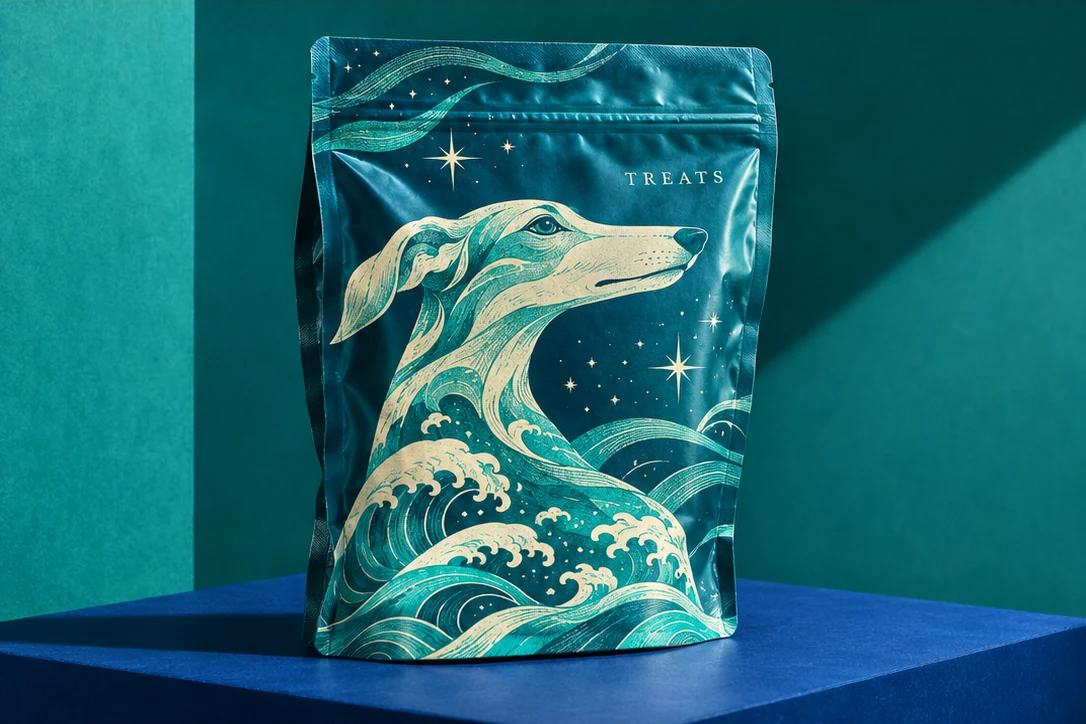
A bottom gusset opens into a base for an upright pack. The front and back panels give artwork room to work on the shelf.
Enquire about this bag
Bottom-gusset pouch · The folded base opens as the pouch fills. Compare samples at your actual fill weight to see the upright shape. Browse bag terminology
Fit for your product.
A loose-leaf tea blend and a dense snack mix can occupy very different volumes at the same weight. For a custom stand-up pouch, start with a measured portion of the actual product. Fill a sample, settle it as it would settle in transit, then check how it stands on the shelf. A resealable zipper is worth considering when a customer will use the contents over several sittings.
Details to specify
- Fill sample
- Send the target weight and the volume it occupies in a measuring vessel. Include a photograph of the product so the size and shape of the pieces are clear.
- Base gusset
- Give the desired shelf depth. On an existing pouch, mark whether your gusset measurement describes the folded panel or the fully opened base.
- Space above the fill
- Mark the filled level, zipper position and final seal on the same drawing. Leave room for the filling tool and the fingers that will open the pack.
- Window and print
- Show the intended window on a filled sample. Ask for a film review if the contents need protection from light or moisture.
Before you order.
Can you size a pouch from net weight alone?
A weight gives only part of the picture. Share a filled reference pouch or measure how much space one portion takes up. Confirm the proposed dimensions with a fill trial.
Where should the artwork sit on a stand-up pouch?
Use the approved template to locate the base fold and seals. Place the product name where it remains visible when the base opens and the front panel curves.